20#
21#
亲爱的同好,以能看懂小说原著为目标的话,恐怕这么学是行不通的。这话令人泄气,但也的确是事实。要读通某个语种的小说原著可并非易事,需要长期大量的练习才行,要读通几个语种的小说原著......说实话,是不可能的。读小说需要对文字有相当深的感受和理解才能享受其中,否则很难有好的体验。要满足这两点有二种办法:要么靠环境浸染(母语或长年当地生活);要么通过大量的查证、练习、推理和生活经验得来。学外语的大部分人只能走第二条路,这意味着极高的时间成本,高到没有人能付得起。我最近恰巧也在研究小说原著,对此中艰难深有体会。我研究的是严肃文学;读文本时我用会用到八部辞典,还要查阅数不清的背景知识,而我最初的想法也和你一样简单,就是读小说原著,且读懂。说了这么多,只是想跟同好你讲;学习语言和用语言学习是两件很不相同的事情。如果对语言本身感兴趣,那学多少种语言都可以;要是想读小说原著,那么最好先计算一下时间成本再开始为妙。:^)
22#
加油哦,虽然很难,但是相信你能成功!
23#
学习进度小结一下
2024-10-9开始学习瑞典语。先在duolinguo学习。
有英语和德语基础的话,学习瑞典语是比较简单的。很多瑞典语单词不用特别记忆,可以看出同源词,就比较容易记忆。不过也确实有一些单词,一时难以看出对应的英语或德语同源词或不同源,就只能单独强化记忆。有意思的是,有些瑞典语单词还能看出和俄语单词明显同形(应该都是外来语)。另外值得注意的是,一些同源词意思已经不一样了,是发生了变化的假朋友,需要小心。
2024-10-26,学习了18天,学习完duolinguo用英语学习瑞典语的第1节(section),共16个单元(unit)。
2024-11-17,学习了40天,学习到了duolinguo用英语学习瑞典语的第2节(section)第26单元(unit)。
2024-10-9开始学习瑞典语。先在duolinguo学习。
有英语和德语基础的话,学习瑞典语是比较简单的。很多瑞典语单词不用特别记忆,可以看出同源词,就比较容易记忆。不过也确实有一些单词,一时难以看出对应的英语或德语同源词或不同源,就只能单独强化记忆。有意思的是,有些瑞典语单词还能看出和俄语单词明显同形(应该都是外来语)。另外值得注意的是,一些同源词意思已经不一样了,是发生了变化的假朋友,需要小心。
2024-10-26,学习了18天,学习完duolinguo用英语学习瑞典语的第1节(section),共16个单元(unit)。
2024-11-17,学习了40天,学习到了duolinguo用英语学习瑞典语的第2节(section)第26单元(unit)。
24#
Disillusion:个人体感,建议楼主学习罗曼语族语言时,从西班牙语开始会比从法语入门更好一些,所以顺序不如调成:“北->南->西->东”,或者“北日耳曼->罗曼->西日耳曼->斯拉夫”回到原帖西班牙语和法语,我早就学过了。所以其实标题准确说应该是把没学过的都学一遍
25#
个人体感,建议楼主学习罗曼语族语言时,从西班牙语开始会比从法语入门更好一些,所以顺序不如调成:“北->南->西->东”,或者“北日耳曼->罗曼->西日耳曼->斯拉夫”
26#
http://www.bossethoren.se/prosodi_eng.html
SWEDISH PROSODY
SWEDISH PROSODY
| STRESS | LENGTH |
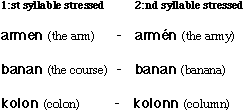
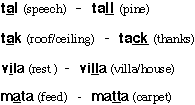
| A syllable is stressed and sounds more prominent than surrounding syllables. Loudness is measured in deciBels (dB), but there is no guarantee that a stressed syllable is stronger in dB. The perceived strength/stress can be due to a combination of duration and tonal change. Examples showing the distinctive function of stress in Swedish: By giving stress to different words in aclause, you can give it a different meaning or a different aspect. | The terms Duration and Quantity are also used. They deal with how much time is required to pronounce a segment or a se- quence of segments. The length of speech sounds is practically always measured in milliseconds. Quantity is the term used when a language has distinctive length. Length in Swedish is complementary, with a stressed syllable always containing a long speech sound, that is a long vowel is followed by a short consonant, and a short vowel is followed by a long consonant (V:C / VC:) Examples showing the distinctive function of length in Swedish: Perceived lengths do not always coincide with actual duration. |
| TONE | |
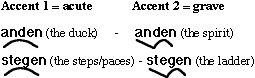
| Also called pitch, intonation or tonal accent. This refers to the fundamental frequency of the voice. (The voice has a fundamental frequency and a great number of harmonics). Frequency is measured in Hertz (Hz), which means vibrations (cycles) per second. The distinctive Swedish tonal accent types are called accent 1 or acute, and accent 2 or grave (also called bisyllabic accent). Swedish intonation does not refer to high or low tones, but rather rising or falling pitch. Examples showing the distinctive function of tone in Swedish: Please note that stress placement anddistinctive length are identical within each word pair. |
27#
28#
ɑː - bra /brɑː/ a - natt /natː/
eː - hel /heːl/ ɛ - äpple /ɛplɛ/
ɛː - träd /trɛːd/
æː - ära /æːra/ æ - verk /værk/,värk /værk/
iː - Kina /ɕiːna/ ɪ - timme /tɪmɛ/
oː - mål /moːl/ ɔ - moll /mɔl/
øː - nöt /nøːt/ œ - nött /nœt/
œː - öra /œːra/
ʉː - ful /fʉːl/ ɵ - full /fɵl/
uː - fot /fuːt/ ʊ - bott /bʊt/
yː - syl /syːl/ ʏ - syll /sʏl/
b - bok /buːk/ d - dag /dɑːg/ g - god /guːd/
p - penna /pɛna/ t - timme /tɪmɛ/ k - kaka /kɑːka/
f - finne /fɪnɛ/ v - svenska /svɛnska/ s - språk /sproːk/
h - hot /huːt/ j - jag /jɑː/ r - rosa /roːsa/
l - allt /alt/ m - mod /muːd/ n - nej /nɛj/
ŋ - lång /lɔŋ/ ɕ - tjena /ɕeːna/ ɧ - sju /ɧʉː/
ɖ - nord /nuːɖ/ ɭ - kärl /ɕæːɭ/ ɳ - barn /bɑːɳ/
ʂ - torsdag /tuːʂdɑːɡ/ ʈ - kort /kɔʈ/
eː - hel /heːl/ ɛ - äpple /ɛplɛ/
ɛː - träd /trɛːd/
æː - ära /æːra/ æ - verk /værk/,värk /værk/
iː - Kina /ɕiːna/ ɪ - timme /tɪmɛ/
oː - mål /moːl/ ɔ - moll /mɔl/
øː - nöt /nøːt/ œ - nött /nœt/
œː - öra /œːra/
ʉː - ful /fʉːl/ ɵ - full /fɵl/
uː - fot /fuːt/ ʊ - bott /bʊt/
yː - syl /syːl/ ʏ - syll /sʏl/
b - bok /buːk/ d - dag /dɑːg/ g - god /guːd/
p - penna /pɛna/ t - timme /tɪmɛ/ k - kaka /kɑːka/
f - finne /fɪnɛ/ v - svenska /svɛnska/ s - språk /sproːk/
h - hot /huːt/ j - jag /jɑː/ r - rosa /roːsa/
l - allt /alt/ m - mod /muːd/ n - nej /nɛj/
ŋ - lång /lɔŋ/ ɕ - tjena /ɕeːna/ ɧ - sju /ɧʉː/
ɖ - nord /nuːɖ/ ɭ - kärl /ɕæːɭ/ ɳ - barn /bɑːɳ/
ʂ - torsdag /tuːʂdɑːɡ/ ʈ - kort /kɔʈ/
29#
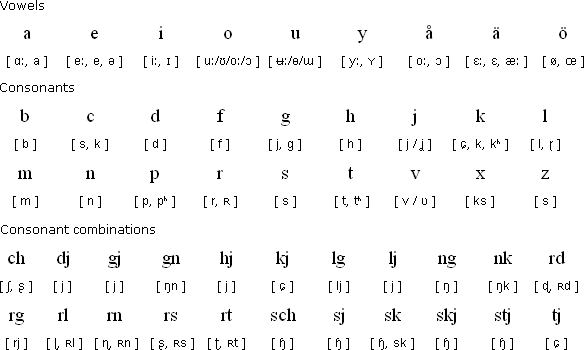
瑞典语字母与读音

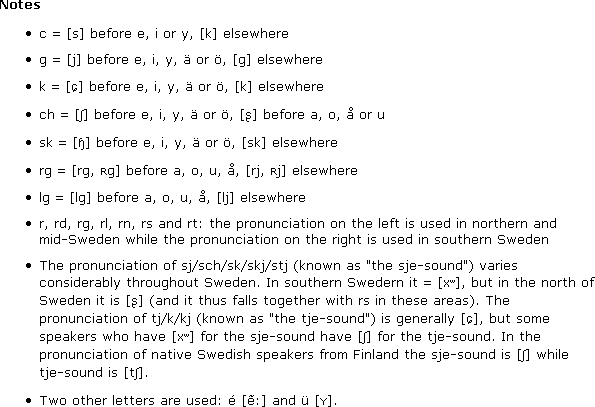
注释(特殊发音)
30#
31#
为什么认为北欧是最简单的
32#
33#
心高命薄。。。。
34#
今天开始,学习瑞典语。
快捷回复
By giving stress to different words in a
Perceived lengths do not always coincide with actual duration.
Please note that stress placement and